In multifamily real estate, photography is a leasing tool, not a vanity asset. An apartment community lives or dies by occupancy, and most prospective renters now tour a property online long before they set foot on site. Sharp, professional images of the units, the amenities, and the grounds are what turn a casual browser into a signed lease. Weak or missing photos, by contrast, leave a community invisible in a crowded San Diego rental market where renters scroll past anything that does not look the part.
This guide explains what multifamily real estate photography involves, how it differs from photographing a home for sale, what a complete shoot should capture, and how the right visuals support a property through construction, lease-up, and the years of marketing that follow.
What is multifamily real estate photography?
Multifamily real estate photography is the professional imaging of apartment communities, condominium complexes, and other multi-unit residential properties for marketing and leasing. It covers far more than a single apartment. A complete shoot documents the individual units, the shared amenities, the common areas, the building exteriors, and the surrounding neighborhood, assembling a full visual story of what it is like to live in the community.
The work sits at an interesting intersection, which is why it is sometimes called commercial residential photography. The subject is residential, people make their homes there, but the client is commercial: an owner, a property management company, or a developer treating the building as an income-producing asset. That dual nature shapes the whole approach. The images have to feel warm and livable enough to attract renters, while also meeting the professional, brand-conscious standards that ownership groups and asset managers expect.
How multifamily photography differs from a single-home listing
Photographing an apartment community is a different discipline from shooting a house for sale, and the differences matter when you hire.
A home listing sells one property to one buyer, and the goal is a single emotional transaction. Multifamily marketing sells a lifestyle to a continuous stream of renters, lease after lease, year after year. The photography therefore has to capture the community as a whole, not just a floor plan. Amenities become central: the resident lounge, the fitness center, the pool deck, the co-working space, and the outdoor gathering areas are often what separate one community from another in a renter’s mind.
Scale and logistics differ too. A multifamily shoot may cover dozens of spaces across a large site, sometimes coordinating around occupied units, leasing schedules, and multiple stakeholders. That calls for an efficient, organized production process and a photographer comfortable working on larger, more complex assets rather than a single living room. The output also gets reused across many channels, the property website, listing platforms, social media, and brochures, so consistency and volume matter more than they do for a one-off home sale.
What a multifamily shoot should capture
A community’s marketing is only as strong as the spaces it shows. A thorough shoot covers the full property story.
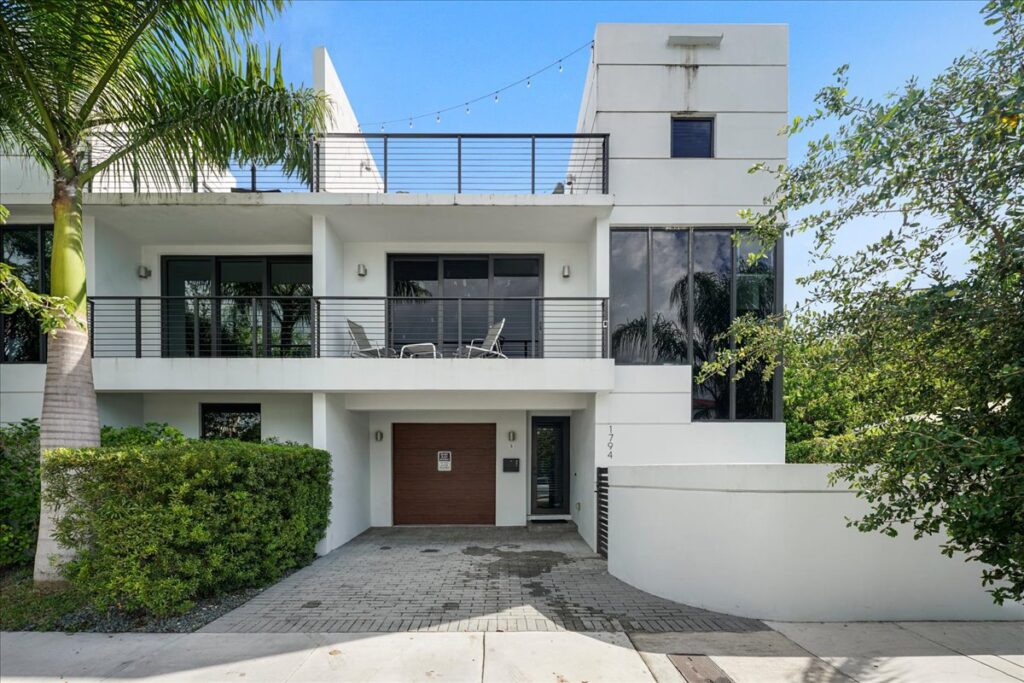
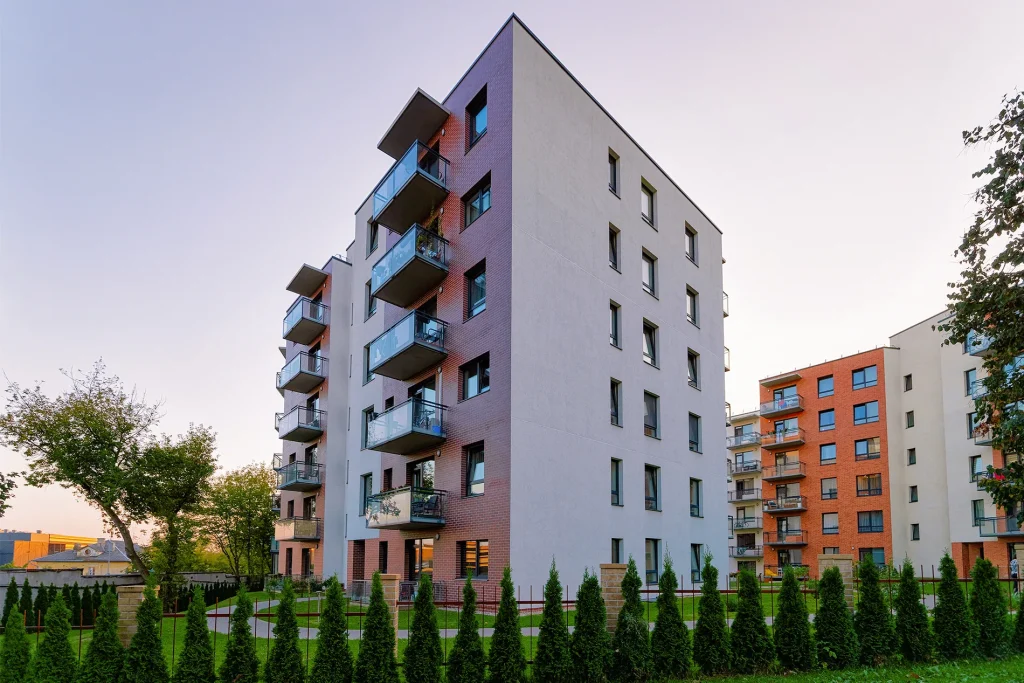
- Building exteriors and architecture. The first impression. Clean, well-composed shots of the facade, entrances, and overall design establish the property’s character, whether it is a coastal high-rise or a sprawling suburban community.
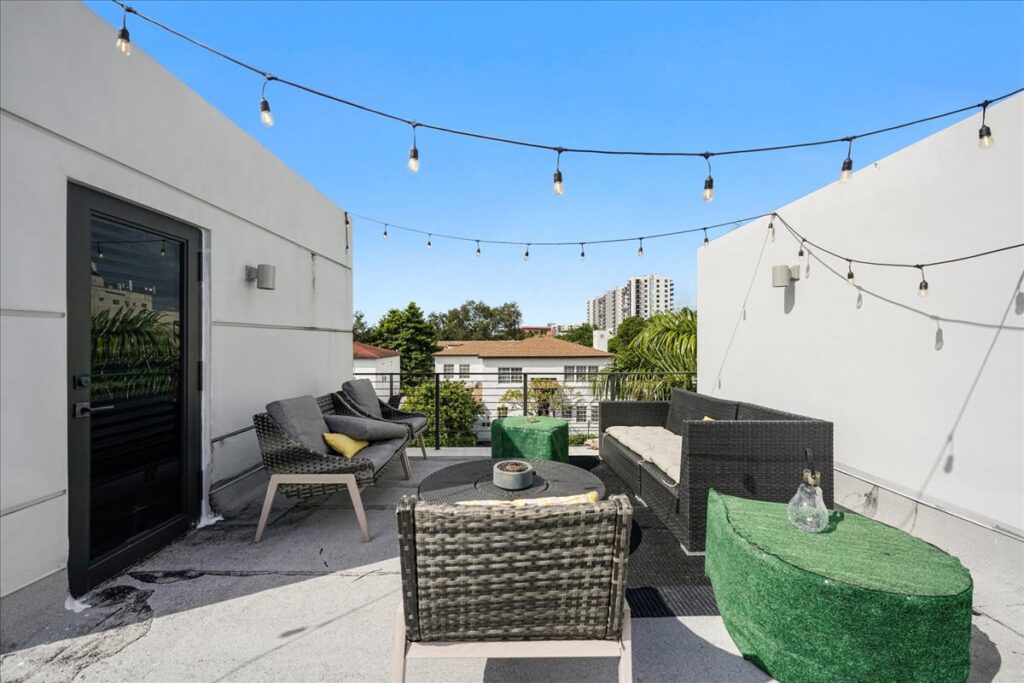
- Amenity spaces. The heart of multifamily marketing. Resident lounges, pools and pool decks, fitness centers, clubhouses, co-working areas, pet zones, and outdoor pavilions are the features renters compare. Each should look clean, bright, and inviting.
- Model units and interiors. Individual apartments shot to show layout, finishes, natural light, and spatial efficiency. Dedicated model unit and amenity photography gives prospects a clear sense of the home they would actually rent.
- Common areas and circulation. Lobbies, hallways, mail rooms, and shared spaces that convey how well the community is maintained.
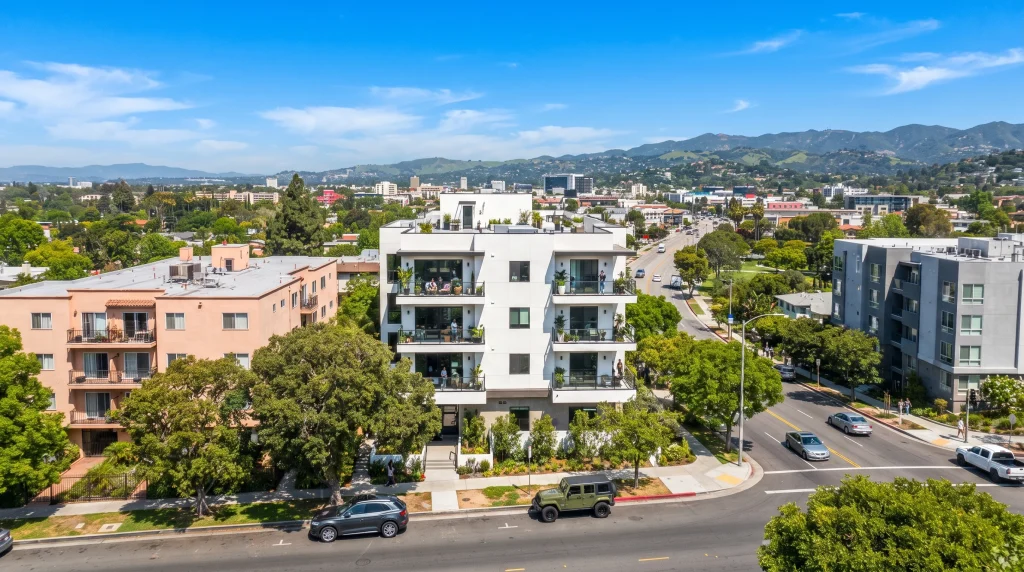
- Aerials and neighborhood context. Elevated shots that show the property’s scale, grounds, and location. Apartment drone photography captures the full site and its proximity to the coast, transit, and local amenities, context a ground camera cannot provide.
Together, these give a prospective renter a complete picture, and give ownership a polished media library to market with.
Apartment and unit photography: showing the living experience
While community amenities draw renters in, the individual apartment is where they decide. Strong apartment photography focuses on the internal flow and premium finishes of each unit, emphasizing natural San Diego light and the spatial efficiency of every floor plan. The goal is to make even a compact unit feel open, bright, and genuinely livable.
This is where technical skill separates professional results from amateur snapshots. Apartments often have tight rooms and mixed lighting, and it takes real craft to balance window light against interior fixtures, keep lines straight, and frame spaces so they read at their true size. When prospects can clearly picture themselves in a unit, they are far more likely to schedule a tour or apply. Pairing those stills with accurate floor plans gives renters the layout clarity that photos alone cannot, reducing wasted tours and unqualified inquiries.
The multifamily media lifecycle: construction to lease-up to ongoing marketing
One of the things that sets multifamily apart is that the photography need spans the entire life of a property, not a single listing window. A strong media partner supports each stage.
Construction and development. For new developments, construction progress photography documents the build over time. These images serve investors, lenders, and stakeholders who want a visual record of progress, and they build anticipation for the community before it opens.
Lease-up. When a new community comes online, speed to occupancy is everything. Lease-up photography for new multifamily communities delivers the polished launch imagery a property needs to start filling units the moment it is ready to lease. The faster a community reaches stabilized occupancy, the faster it performs financially.
Ongoing marketing. Once stabilized, a community still needs fresh content to maintain occupancy and brand presence. Multifamily marketing content for ownership groups keeps the visuals current across the website, social media, and listing platforms, while apartment video production adds motion-based content that performs well on social and gives prospects a dynamic feel for the community.
Viewing photography as a lifecycle rather than a one-time task is what keeps a multifamily asset competitive year after year.
How to prepare a community for a photo shoot
Preparation has an outsized effect on multifamily results, and on a large site it takes more coordination than a single home. A little planning protects the quality of the whole shoot.
- Stage the amenity spaces. Lounges, fitness centers, and clubhouses should be spotless and styled, fresh towels in the gym, clean glass on the pool fence, cushions arranged, no maintenance equipment in frame. Amenities sell the community, so they deserve the most attention.
- Coordinate model units in advance. Confirm which units will be photographed and ensure they are cleaned, staged, and ready. For occupied-unit shoots, give residents notice and schedule access ahead of time.
- Time around light and usage. Pools and outdoor spaces photograph best in good light and when they are clean and empty of clutter. Coordinate the schedule so amenity areas are available and presentable during the shoot window.
- Tidy the grounds and exteriors. Landscaping trimmed, walkways swept, parking areas orderly, and signage clean. The exterior is the first impression a prospect sees.
- Brief the on-site team. A point of contact who can unlock spaces, manage access, and keep the shoot moving keeps a large project on schedule.
A community that is shoot-ready lets the photographer focus on craft, and the difference shows across every amenity and unit in the final library.
Why professional multifamily photography drives occupancy and rent
The return on multifamily photography shows up directly in leasing metrics. Professional imagery creates a high-end first impression that lifts online engagement, and more engagement means more views, more tours, and faster leasing. In a market where renters compare communities side by side on the same platforms, the property with sharper, more inviting photos wins more attention and fills units faster.
There is a rent dimension too. Elite photography that showcases luxury finishes and a desirable community lifestyle helps justify premium rental rates and establishes brand authority for the property. A community that looks polished and well-managed online signals quality, and renters pay for quality. Against the cost of a vacant unit, every week of vacancy is lost revenue that never comes back, professional media that shortens time-to-lease pays for itself quickly and keeps paying across every future turn.
What to look for in a multifamily photographer
Hiring for multifamily work requires checking a few things beyond a nice portfolio.
- Experience with large, complex assets. Shooting a 300-unit community is different from a single home. Look for genuine multifamily and apartment community work in the portfolio.
- An efficient, organized production process. Large shoots demand coordination around occupied units and leasing schedules. Efficiency keeps the project on time and on budget.
- Fast, reliable turnaround. Marketing timelines are tight, especially during lease-up. A dependable provider commits to a clear delivery window, with rapid turnaround, as quick as 24 hours, available for large-scale and new construction projects.
- Full media capability. Photography, drone, video, and floor plans under one roof keep the community’s visuals consistent and simplify vendor management.
- Licensing and insurance. A fully insured operation with FAA-certified drone pilots is essential for professional, liability-aware work on commercial properties.
The right multifamily photographer is a strategic media partner, not just a vendor, someone who understands leasing and can deliver at the scale and pace the asset requires.
How PropertyVidPro approaches San Diego multifamily photography
PropertyVidPro works as a media partner for the multifamily and apartment sector across San Diego and Southern California, from coastal high-rises to sprawling suburban residential communities. The team’s lens work captures the architectural character of a property along with the amenity spaces, resident lounges, pools, and outdoor pavilions, that drive leasing decisions, and presents every space clean and professional for prospective renters.
The operation is built for the pace multifamily demands. Production is efficient and organized for large sites, turnaround is fast, with rapid 24-hour delivery available for large-scale and new construction work, and the full media suite spans apartment photography, apartment drone photography, video, and the construction, lease-up, and ownership marketing services a community needs across its lifecycle. The team is fully insured with FAA-certified drone pilots. You can see the full scope on the multifamily photography in San Diego CA page.
Frequently asked questions
What is multifamily real estate photography?
It is the professional imaging of apartment communities and multi-unit residential properties for marketing and leasing. A shoot covers the units, amenities, common areas, exteriors, and neighborhood, building a full visual story of the community for owners, managers, and developers.
How is multifamily photography different from photographing a home for sale?
A home listing targets one buyer and one sale. Multifamily marketing sells a lifestyle to a continuous stream of renters, so it emphasizes community amenities and spans many spaces across a large site, with output reused across the website, listings, and social media over time.
What should a multifamily photo shoot include?
Building exteriors and architecture, amenity spaces like lounges, pools, and fitness centers, model units and interiors, common areas, and aerial drone shots showing the full site and its location. Floor plans and video are common additions.
Why does professional multifamily photography matter for occupancy?
It creates a strong first impression that lifts online engagement, leading to more tours and faster leasing. Polished imagery also supports premium rents and brand authority, while shortening costly vacancy between leases.
What is the difference between apartment photography and multifamily photography?
Apartment photography focuses on individual units, their flow, finishes, and light. Multifamily photography is broader, covering the entire community, including amenities, common areas, exteriors, and aerials, to market the property as a whole.
How fast can multifamily photos be delivered?
Turnaround depends on the project size, but rapid delivery, as quick as 24 hours, is available for large-scale and new construction work, which helps keep lease-up and marketing timelines on track.
Ready to market your San Diego community?
If you own or manage a multifamily property and want imagery that fills units and supports your brand, explore multifamily photography in San Diego, CA or call PropertyVidPro at (909) 282-8546. Book a free consultation, and give your community the marketing it needs to lease faster.